
The History of the Latin American Centre 1965-2026
By Eduardo Posada-Carbó, Diego Sánchez-Ancochea, Felipe Krause & Frank Egerton
Origins
There is no certainty about the foundational date of the Latin American Centre. The historical records offer different versions.
One account from St Antony’s reported that the college had established the centre ‘under the direction of Mr A.R.M. [Raymond] Carr’ during the academic year 1963-64, but later accounts referred to its establishment in 1965. Whether in 1964 or 1965, the interest in setting up a programme in Latin American Studies dates from at least 1959, when the Astor Foundation gave a grant to the College in support of studies of the region. A year later, St Antony’s recruited perhaps its first graduate student working on Latin America, Juan Maiguashca, an Ecuadorian, who wrote his DPhil on ‘A Reinterpretation of the Guano Age, 1840-1880’.
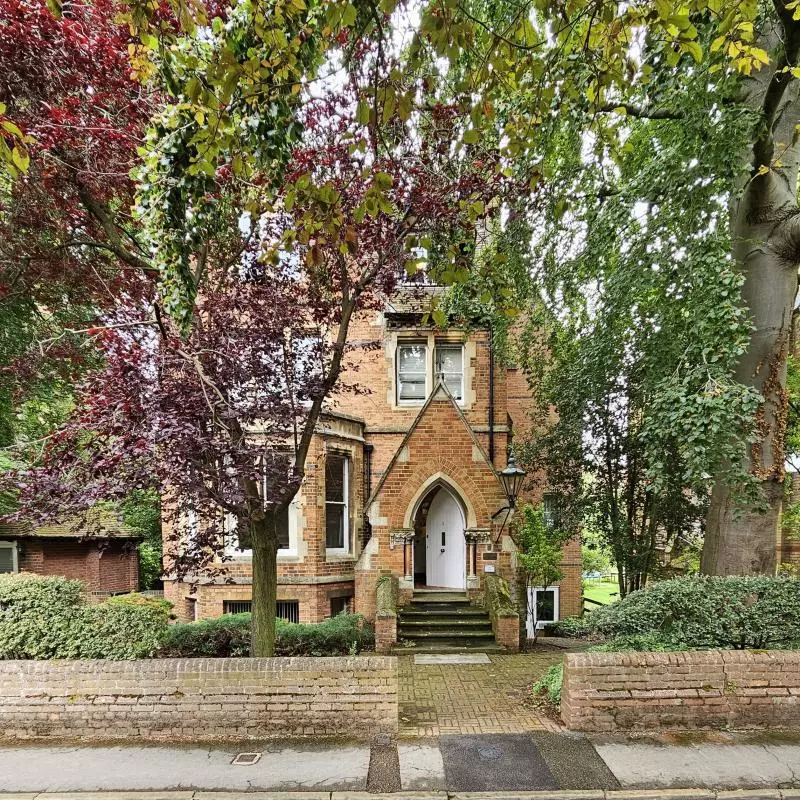
Efforts to secure further funds for the LAC, and establish institutional links in the region, followed, including several trips to Latin America by William Deakin (the first Warden of St Antony’s), Raymond Carr, and Alistair Hennessy. Some of these early initiatives yielded prompt results. A Leverhulme Trust grant provided a limited number of scholarships for graduate students to spend some time in the UK or Latin American universities. A joint programme between the emerging centre in Oxford and the Royal Institute of International Affairs (Chatham House) in London was set up to encourage research on the region. A substantial donation from the Ford Foundation allowed the centre to recruit eleven graduate students during the academic year 1964-65. By then the centre, now operating in 21 Winchester Road with its own library, was running a leading seminar hosting notable scholars and policymakers based both in Latin America and the United Kingdom, such as Celso Furtado, Oswaldo Sunkel, and Stephen Clissold.
As this introductory account shows, by 1965, when the University Grants Committee published its report (known as the Parry Report) recommending the establishment of a handful of Latin American Centres in the United Kingdom, the LAC in Oxford had already taken off, alongside similar initiatives in other universities in the UK. Indeed, as a recent essay by Rory M. Miller makes clear, some of the bases for the growth of Latin American Studies in the UK preceded the Parry Committee. Miller also shows that the ‘activities of a few academic pioneers and entrepreneurs, especially in London, Cambridge and Oxford, coupled with government and foundations funding’, serve to explain the origins of Latin American studies in the UK as much as the geopolitics of the Cold War that have often assumed to be solely behind the development of Area Studies in the region and elsewhere.
LAC Developments 1965-2003
In broad strokes, the developments of the LAC after its original steps can be divided in two main periods: the first, from its formal set up in 1964-65 as a college centre with wider university roles; the second, from 2004, as part of the newly established School of Interdisciplinary Area Studies.
Between 1966 and 1972, the LAC recruited its initial cohort of faculty members that very much shaped its life for the years to come. These included Alan Angell, Malcolm Deas, Laurence Whitehead, Rosemary Thorp, Herminio Martins, and Christopher Platt – all became long-term fellows of St Antony’s except for Laurence who, after his initial appointment, moved to Nuffield. (The Argentine historian Tulio Halperin-Donghi had a brief spell at the LAC as its Director in 1970-71). Alan Knight, who had been a BA and DPhil student in Oxford during the centre’s period of formation, joined the LAC in 1992, followed by Valpy Fitzgerald the same year, and Leslie Bethell in 1993. While their names may be the most prominent from these early years, as they remained long attached to the LAC, its fellowship was much larger as it included a good number of other colleagues working on a wide range of disciplines in the social sciences and the humanities, some attached to other colleagues, others in short-term appointments. This core group pretty much covered the whole region, with some often specializing on individual or groups of countries. There is no space here to list their enormous contribution to the scholarship on Latin America in their respective fields – in addition to the better understanding of the individual countries they studied, they also actively participated in ongoing academic debates on key topics such economic development, dependency theory and informal empire, the debt crisis, transitions from authoritarian rule to democratization, labour movements, revolutions, security and crime.
How comprehensive the centre’s coverage of Latin America was, however, can only be appreciated by looking at its wider fellowship: David Browning (St Cross), for example, studied El Salvador; Colin Clarke (Jesus) undertook research on the Caribbean as did David Nichols (Exeter and St Antony’s) who wrote on Haiti. The disciplinary coverage was similarly wide, including geography, politics, sociology, history, economics, social anthropology, and literature – from 1986 to 1974, David Gallagher (St Antony’s) was University Lecturer in Latin American Literature.
The interdisciplinary nature of the LAC was reflected in the development of the BPhil in Latin American Studies (a 2-year postgraduate degree, which became our MPhil in 1980), established shortly after the LAC started operations. Just consider some of the options that the students could take during the 1970s-1990s: ‘Social problems in Latin American Fiction’; ‘Competitive and non-Competitive Party Systems’; ‘Relations Between the US and Latin America since 1933’; ‘Education, Culture end Development’; ‘The Brazilian Novel of the North East’; ‘Amerindian Societies’; ‘Social Stratification’; ‘Colombia and Venezuela, from 1808 to the Present Day’; ‘Labour Movements’; ‘Introduction to the Latin American Economics’; ‘Latin American Poetry from 1918’; ‘Battlism and Peronism’; ‘The Political System of Brazil’; ‘The Bolivian Revolution of 1952 and the Cuban Revolution of 1959’; ‘The Political System of Mexico’; ‘Local Communities and Modern Social Institutions’; ‘Agrarian Problems’; ‘Physical Environment and Natural Resources’; ‘Problems of Regional Integration’; ‘Political Power and Protest’; ‘Foreign Trade, Investment and Economic Development’; ‘The Novel of the Mexican Revolution’; ‘The Political Geography of the Caribbean Basin’. This BPhil programme, then managed by an Inter-Faculty Committee for Latin American Studies, started to recruit students in the academic year 1967-68. If, at the beginning, the core of its student body came from Latin America and the UK, it soon acquired a more cosmopolitan outlook. From 1994 to 2013, the LAC also ran an MSc in Public Policy in Latin America. In addition to those joining these programmes every year, the student body was formed together with a large number of doctoral candidates supervised by members of the LAC (40 in 1996).
The teaching syllabus was complemented by an intense programme of extra-curriculum activities, led by a weekly seminar series that regularly attracted a wealth of international scholars. From the initial contacts with institutions in the region, like the Di Tella in Argentina and the Instituto de Economía in Chile, the LAC strengthened its links with universities in the Americas and Europe, as well as with important international organizations like the Inter-American Development Bank. Since its establishment, there have also been a good number of other initiatives to forge further relations with specific countries in the region. For example, in 1974, President Rafael Caldera inaugurated the Andrés Bello Fellowship in St Antony’s, set up with the Central Bank of Venezuela, to sponsor annual visits of Venezuelans to Oxford. An agreement with the University of Campinhas in Sao Paulo in the 1980s was one of several initiatives to secure the presence of Brazil in Oxford. A more significant step was taken in 1997, with the establishment of the Centre for Brazilian Studies, under the direction of Leslie Bethell, who had joined the LAC as Baring Foundation Fellow in 1993 (see section below by Felipe Krause). From 1987, a scholarship left by the late Ronaldo Falconer sponsored residents from Costa Rica to pursue postgraduate studies at the LAC. An Argentine programme (led by Celia Szustermann), ran from 1996 to 2002.
When in 2003 the university published a committee report about the future of area studies, the LAC was as active and innovative as ever. The echoes of the previous end of the year party, ‘enlivened by a Salsa band composed of our students’ still resonated in its premises, now at 1 Church Walk, where it had moved since 1993, ‘gratefully inheriting the Old Nissan Centre’. In spite of the expected uncertainties created by the major reforms on university governance, the LAS did not just ‘soldier on’ but reported ‘encouraging results’, with a growing number of students, a wealth of visiting scholars, expanding research outputs by its fellows, a rich seminar and conference programme, a strong administrative and library team, and several fresh initiatives. A new Hewlett grant sponsored a research fellowship programme, including the setting up of a database for Latin American economies in the 20th century. In addition to the usual seminar programme, the LAC organised a conference on El Salvador. Ana Covarrubias (a former DPhil student in St Antony’s) ran the second year’s Mexican programme, inaugurated by President Vicente Fox the previous November, when he also lectured at the Sheldonian Theatre.
Eduardo Posada-Carbó
The Latin American Centre, 2004-2026
2004 represented a turning point for the Latin American Centre. The creation of the School of Interdisciplinary Area Studies (SIAS)—renamed Oxford School of Global and Area Studies (OSGA) in 2018—placed all regional centres under the same umbrella and strengthened their joint financial position. In the subsequent two decades, SIAS/OSGA gradually became a true School with closer and more constructive collaborations between the different units.
One year before, in 2003, the LAC had experienced another big change with the creation of the MSc in Latin American Studies. This one-year program was created to complement the two-year MPhil. By reducing the overall cost of a degree and increasing the number of students we could recruit, it broadened access to the LAC’s programmes to dozens of students annually in subsequent years.
Between 2006 and 2008 the LAC experienced a significant process of generational renewal. Alan Angell, Malcolm Deas and Rosemary Thorp retired after successfully running, together with Alan Knight, the Centre for decades. At the same time new faces arrived: Joe Foweraker (later replaced by David Doyle), Tim Power (coming from the defunct Brazilian Studies Centre – see note below), Leigh Payne and Diego Sánchez-Ancochea. These changes represented renewal rather than rupture: traditional LAC concerns with democracy, development, history, and inequality remained central but were approached through new questions and further comparative frameworks. In political science, Power’s work on democratic institutions developed into the ESRC-funded Coalitional Presidentialism Project, carried out with Paul Chaisty and Nic Cheeseman. By comparing Latin America with Africa and post-communist Europe, the project exemplified a growing tendency to use deep regional knowledge as a basis for cross-regional comparison. Leigh Payne, meanwhile, developed a major research programme on transitional justice, human rights and accountability. Her agenda subsequently broadened to encompass corporate accountability, disappearances in post-transition democracies and mobilisation against rights. Her research also shaped teaching: Payne introduced a new core course on the Sociology of Latin America and, with Francesca Lessa, a popular option on human rights.
Some of the LAC’s research on political economy continued Rosemary Thorp’s interest in inequality. Juliana Martínez Franzoni from the University of Costa Rica and Diego Sánchez-Ancochea wrote extensively on the determinants of universal social policy in the global South. Their joint work on Costa Rica and other Central American countries brought more attention to this subregion at the LAC. Meanwhile, David Doyle made significant contributions to our understanding of the political consequences of remittances as well as the political economy of taxation, exploring their impact on social spending, redistribution and the persistence of inequality in Latin America.
History remains a key discipline at the LAC. Alan Knight continued to write extensively on Mexican history in the twentieth century before and after his retirement in 2013. His work follows a longstanding LAC tradition of combining deep country expertise with comparative analysis of the major historical processes shaping Latin America. This combination of country specialization and regional interests is also reflected in Eduardo Posada-Carbó’s work. In the last two decades, he has developed an ambitious comparative research agenda on the history of democracy in Colombia and Latin America more generally. His work has challenged traditional accounts centred on caudillismo and authoritarianism by recovering the importance of elections and political institutions. Posada-Carbó was also the founder of the Latin American History Seminar which meets every Thursday during term time. Launched in 2013, this seminar series has become a reference point for the diffusion of research on Latin American history in Oxford and beyond. The creation of the Postdoctoral Fellowship in the Contemporary History and Public Policy of Mexico in 2017 further strengthened the teaching and research of History at the LAC, while helping to renew Oxford’s longstanding strength in Mexican studies following Alan Knight’s retirement. Made possible by generous support from CONACYT, Mexico’s National Council of Science and Technology, the fellowship brings a new postdoctoral researcher to Oxford every three years, based jointly at the LAC and the History Faculty – the current post-holder is Jessica Fernández de Lara Harada, a historian with a interest in the legal, social and cultural history of Mexico.
The LAC also continued to strengthen its links with Latin America and international organisations. An agreement with CAF–Development Bank of Latin America supported visiting senior economists, MSc scholarships, collaborative research and conferences in Oxford and Latin America between 2012 and 2018. In 2016, the LAC and Universidad del Pacífico created the Rosemary Thorp Fund to support academic exchanges and joint activities between the two institutions. Such partnerships helped reinforce the Centre’s presence in the region while connecting research, teaching and policy debate. The LAC remains committed to our Brazilian Studies Programme, now under the coordination of Felipe Krause, who also convenes a course on Brazilian Politics (see his report below).
More recently, the LAC’s agenda has continued to broaden, encompassing urban development, drug policy and new challenges to democracy and rights, and environmental politics and geography, the latter encouraged by Gregory Thaler, an expert on the Amazon, who joined the LAC in 2024. In 2027, we will be welcoming Jenny Pribble who, as Professor in the Politics of Latin America, will be pursuing a research agenda on the new political right in the region. Our programme continues to benefit from the contributions of Laurence Whitehead and John Crabtree, particularly to our course on Andean Politics. At the moment of writing this piece, the LAC has been re-energised by a stream of young scholars who contribute significantly to the life of the Centre, including Felipe Krause, Jessica Fernández de Lara Jarada, Belén Villegas Plá, Federico Fuchs, Daniel McDonald, Ana Lucía Peláez Echeverría, Maria Poulakkainen, Sebastián Priego and Matías Giannoni. This diversification has preserved a characteristic visible throughout the Centre’s history: combining deep knowledge of Latin American countries with interdisciplinary and increasingly comparative approaches to the major political, economic, social and historical questions facing the region.
After six decades since its foundations, the LAC could look back to its achievements with a sense of pride. From its early years, the Centre became a world hub for the study of Latin America, a meeting point for scholars and policymakers alike. Its members’ contribution to the knowledge of the region on an array of disciplines, fields and countries has been outstanding. Through its own masters’ programmes and the supervision of doctoral students at different faculties, the LAC had also contributed to the education of a large number of students, who went on to pursue successful and varied professional careers worldwide. We have strengthening contacts with our wide network of former students, including those who reside in London – over the past five years, our alumni receptions at the Canning Club have been a resounding success. From its beginnings, the LAC has counted on the continued support of a strong administrative team, currently formed by Eliza Flindall and Elvira Ryan, and a group of specialised librarians from the Bodleian (see below section by Frank Egerton). Elvira, who joined us in 1988, once baptized the LAC as the ‘Happy Centre’. Our End of the Year Party, which now combines salsa with rock music, ensures that we live up to our reputation.
Diego Sánchez-Ancochea
Brazilian Studies
The first Brazilian known to have received a degree from Oxford was Francisco Inácio de Carvalho Moreira, the Baron of Penedo and Brazil’s Minister at the Court of St James’s, who was awarded an honorary Doctor of Civil Law on 2 July 1862. In 1922, the young Gilberto Freyre wrote in his diary of the delight at finding himself in the Oxford of Walter Pater, whose work he had read avidly. A decade later, Casa-Grande & Senzala would establish Freyre as one of the most influential interpreters of Brazilian society. In 1938, the poet and musician Vinícius de Moraes, who would go on to become a diplomat and a leading figure in the emergence of bossa nova, came to Magdalen College to read English literature on the first British Council scholarship awarded to a Brazilian to study at Oxford. He wrote much of Poemas, sonetos e baladas at Magdalen before the outbreak of war cut his stay short. These encounters with the city form part of a long history of intellectual exchange between Brazil and Oxford that would deepen over the course of the twentieth century and eventually find a home at St Antony’s College.
Brazil was very much present from the very beginnings of the Latin American Centre. Celso Furtado, former Minister of Planning in Brazil, contributed to the first seminar series organised by the LAC in St Antony’s in 1964-65. That year, the college record reported on the work of Raouf Khalil, an Egyptian economist who completed his DPhil on Brazil’s economic development in 1966. Other Brazilians and Brazilianists contributing to the life of the LAC in those early years included Boris Fausto, Octavio Ianni, Peter Flynn, and John Russell Wood, who chaired the Inter-Faculty Committee that oversaw the BPhil programme of Latin American Studies. In 1971, Herminio Martins became member of the LAC as Lecturer in Sociology, where he taught Brazilian politics. His Mesa Lusofona welcomed Portuguese-speaking colleagues and students to lunch at St Antony’s every Tuesday.
The institutionalisation of Brazilian studies at Oxford was strengthened in 1997, when Leslie Bethell founded the University’s Centre for Brazilian Studies at St Antony’s and became its first director. Bethell had begun planning the Centre in 1993 during a Baring Foundation fellowship at the College. The project had the backing of Warden Ralf Dahrendorf, President Fernando Henrique Cardoso and Brazil’s ambassador in London, Rubens Barbosa. Its founding supporters included Brazil’s Foreign and Culture ministries, Banco Safra, Grupo Votorantim and Organizações Globo. Cardoso inaugurated the Centre at Buckingham Palace on 3 December 1997. While its first Oxford premises were modest – rented rooms above a dentist’s practice – by 2000 the Centre had moved into a late Victorian villa at 92 Woodstock Road, close to the College. Cardoso visited the Centre in 2002, when the University awarded him an honorary doctorate.
In February 1999, after his third presidential defeat, Luiz Inácio Lula da Silva came to St Antony’s with Tarso Genro, Marco Aurélio Garcia and other leading figures of the Worker’s Party for a workshop on the future of the Brazilian left. Genro later credited the meeting, hosted by the Centre for Brazilian Studies, with helping set the party on the course that led to Lula’s victory in 2002. The College reports capture something of the Centre’s day-to-day life. In 2001–02 it organised academic events alongside Ashmolean exhibitions of Brazilian Baroque art and contemporary photography. In June of 2002, it rearranged a conference and put out a sandwich lunch so delegates could watch Brazil in the World Cup, which it duly won.
When the Centre closed in 2007, Timothy Power established the Brazilian Studies Programme within the Latin American Centre. Early workshops considered political corruption and accountability in 2008 and, with Fundação Getulio Vargas in 2009, Brazil’s growing global influence. Power’s Brazilian Legislative Survey, launched in 1990 and now co-led with Cesar Zucco, has tracked the views of Brazil’s legislators across ten waves through 2025, giving scholars a rare record of how the country’s political elite has changed over more than three decades of democratic rule. The Brazilian Studies Programme devoted its entire 2026 annual conference to new research from the survey’s tenth wave.
Andreza Aruska de Souza Santos took over the Brazilian Studies Programme in 2018, followed by Laura Trajber Waisbich in 2023 and Felipe Krause in 2024. In 2019, Cardoso – whose work as a sociologist had helped shape the international debate on dependency well before he became president – returned to St Antony’s to give a keynote at an international conference hosted by the LAC, in collaboration with OSGA’s South Asian Programme and the Global History of Capitalism project, to mark the 50th anniversary of the publication of Dependency and Development in Latin America, his classic study with Enzo Faletto. The Brazilian Studies annual conference, regularly covered by students in Horizontes, has become a fixture of the Programme’s public life. The 2025 conference, Pathways to Development, was organised by Krause and MSc student Luciana Fortuna. The conference closed with a keynote session chaired by Timothy Power, with contributions from Antonio Patriota, the Brazilian ambassador to the UK, and the historian Kenneth Maxwell, founding director of Harvard’s Brazil Studies Program. In November 2025 the Programme screened Gabriel Silvestre’s A Place in the City, which takes viewers into neighbourhoods in Belo Horizonte and elsewhere in Latin America. On 3 November 2026, visiting political scientist Oswaldo Amaral and Geoff Dyer, the Financial Times’s Latin America editor, joined Oxford colleagues to discuss what the dramatic outcome of the recent presidential election meant for Brazil.
These events are part of a year-round programme that brings students and researchers from across Oxford into conversation with visitors whose work spans scholarship, public policy and the arts. That exchange carries into the classroom through The Politics of Brazil, a longstanding postgraduate option course at the Latin American Centre, currently convened by Krause. The Programme remains one of the few university programmes in the United Kingdom devoted specifically to Brazil.
Felipe Krause
The Latin American Centre Library
2025-26 marked the Latin American Centre’s sixtieth anniversary year and the fiftieth anniversary of its library. The Centre’s library is said to have started life as a couple of shelves of books acquired by Malcolm Deas, one of the longest-serving fellows at the Centre. Malcolm became University Lecturer in Latin American Politics and Government in 1966 and continued to take an active interest in the library after his retirement and until his death in 2022. Malcolm was the Centre’s fellow-librarian and someone I much enjoyed working with and learning from after I started as a library assistant in 2007.
For much of its existence, the library was run by Ruth Hodges and Laura Salinas, both of whom gave me much advice about the centre, running the library and working with its collections.
The library became part of the Bodleian group of libraries in 2004 (then known as the Oxford University Library Services or OULS), although it had been part-financed by the University’s Library Board throughout the 1990s.
When the library became a Bodleian site, it began to benefit from the economies of scale that being part of that group enabled. When I arrived, though, the library was still very much run on traditional lines. Books had been added (though not all) to the University’s online library catalogue, but loans were still recorded on slips of paper and filed in boxes. There was no WiFi and only a rudimentary website.
The present team has been together since 2010, which is pretty remarkable continuity in the Oxford library world. It has been great to have worked with Rebeca Otazúa and Samantha Truman during those years and it continues to be so. Lots of changes have happened – WiFi, our website, LibGuides, the PCAS machine, the cataloguing of the massive grey literature collection in boxes in the Stacks, dealing with donations, buying new books and cataloguing them, buying databases and, for over a decade now, ebooks. We are on our third library management system. Well over a decade ago, the formal library committee – known as the CLiPS – was set up, with unstinting support from Eduardo Posada-Carbó and other academic colleagues. As part of the Bodleian Libraries, we have benefitted most of all, perhaps, from very strong budgets for book buying and for growing the collections. More recently we have become a delivery point for requests from the offsite store.
Although the smallest Bodleian Library, we offer all the services you would expect at the bigger sites, and we are backed up by the wider Latin American Studies holdings at the Collections Storage Facility, which extend to over 100,000 books.
What makes the library and its centre though are the people involved. Wonderful students over these many years and wonderful academic, support staff and library colleagues.
A Final Digression on the Card Catalogue
If you have ever visited the Latin American Centre, you may have wondered what the long brass-handled piece of furniture is in the entrance hall. It is the Union Card Catalogue for Latin American Studies collections across the University – at least it was in the days before the online catalogue was launched in the 1990s. Each book – whether at LAC, the Taylorian or the Geography Library, to name but three – was recorded on a single card with details of its title, author, library and shelf mark, plus other details if the librarian had time. Cards were also completed by LAC fellows, including, notably, Malcolm Deas, some of whose cards are on display in our 50th anniversary exhibition. The catalogue was divided into two halves – the author catalogue and the subject catalogue. In theory, there should be one card for each book in each half.
Frank Egerton
Bibliography
José Benjamín Escobar, ed., Venezuela en Oxford. 25 años de la Cátedra Andrés Bello en el St Antony’s College de la Universidad de Oxford (Caracas, 1999).
María Jesús González, Raymond Carr. La curiosidad del zorro. Una biografía (Barcelona, 2010), chapter X, 325-63.
Horizontes. Newsletter of the Latin American Centre (Oxford, Summer 2013-2022)
Rory M. Miller, ‘Academic Entrepreneurs, Public Policy, and the Growth of Latin American Studies in Britain during the Cold War’, Latin American Perspectives, 221: 4 (July 2018), 46-68.
C.S. Nicholls, The History of St Antony’s College, Oxford, 1950-2000 (Oxford, 2010), chapter 7, 102-114.
St Antony’s College. Records (Oxford, 1950-2016).